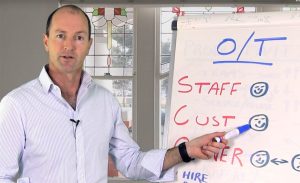
In this video, I talk about the difference between “doers” and “completers” and why this really comes down to creating a sense of urgency in your team. Doers are often busy with tasks, but without much focus on getting things finished. Completers, on the other hand, are the people who push through, finish the job, and get that sense of achievement that comes with completion. As business owners, we want more completers. The best way to encourage this is by using what I call “time talk.” It’s about framing every meeting, every discussion, and every instruction with a time frame. For example, “Will you have that finished by the end of today?” or “Can we complete this by the end of the week?” By consistently talking about time and completion, you pass on your sense of urgency to your team. This can be a great discussion point in team meetings … Read more
Today I want to talk about something I see way too often in tradie businesses what I call The Great Xero Addiction. Here’s the pattern: A small trade business grows to the point where they put on an admin person. The biggest pain point for the business owner at that stage is often the accounting system (usually Xero or QuickBooks) so that becomes the admin’s primary focus. Makes sense, right? But as the business grows, the admin role grows too. They start picking up the phone, managing a job management system like ServiceM8 or Simpro, scheduling the team, and handling materials. Yet despite all that, many admins stay heavily focused on Xero. It becomes their comfort zone and the thing they default to even if it’s not the most valuable use of their time. That’s where the problem lies. In a growing business, answering the phone can be the difference … Read more
In his latest video, business coach Hugh Bowman tackles a controversial question: Is it OK to poach employees? His answer? Absolutely! Hugh explains that the ideal employee is already working for someone else – most likely at a nearby business. After all, if someone is unemployed or has been made redundant, there may be valid reasons to question their suitability. As a business owner, the goal is to recruit the best people possible to strengthen the team and drive success. He draws a comparison to sports, highlighting that no athlete spends years training only to step onto the field expecting to lose, or even to settle for a draw. The best business owners follow the same principle: they hire top talent, deliver the best work, secure the most profitable jobs, and ultimately run the easiest, most successful businesses. For those looking to learn more about effective recruitment strategies, Hugh invites … Read more
Mastering Productive Team Meetings in Your Trades Business Team meetings—a phrase that can either evoke enthusiasm or a sense of dread, depending on your experience. In the realm of trades businesses, running effective team meetings is often a challenge that business owners grapple with. But fear not, for we’re here to guide you through the art of conducting productive team meetings that yield tangible results. Whether you’re dealing with a small team or a larger crew, these strategies are designed to ensure that your team meetings become a valuable asset rather than a time-wasting chore. Setting the Stage: The Agenda The first and foremost rule of thumb when it comes to team meetings is having a well-structured agenda. This agenda serves as your compass, guiding the discussion and ensuring that every relevant topic is covered. Imagine an agenda that’s so clear and concise that anyone, even in your absence, … Read more
Creating and Sustaining a Positive Culture in Your Trades Business In the dynamic world of trades businesses, the significance of cultivating a thriving workplace culture cannot be overstated. A healthy culture not only enhances productivity but also reduces employee turnover rates and fosters an environment where everyone can thrive. So, how can you build and maintain an exceptional culture that resonates with your trades business? Let’s explore some actionable steps and insights that can make a substantial difference. Documenting Your Culture The first step towards establishing a great workplace culture is to document it. This involves putting your culture’s values, norms, and expectations in writing. While this might sound like a formal process, it’s crucial for ensuring that every member of your team understands and embraces the culture you aim to foster. In the context of trades businesses, where practicality is often favoured over elaborate corporate jargon, adopting a point-by-point, … Read more
Recently I’ve done quite a few videos on recruiting for small businesses who want to recruit for themselves, and so this is an extension of this. This is a great tip. If you’ve gone through the recruiting process, you’ve got the right guy, he’s just started. Now one of the things I think is the most i
Are you the kind of business owner that thinks just because you are busy it is worth working overtime to ‘get more work done’? If this is true then you are probably not making any profit on that extra work and would be better off relaxing with your feet up sitting on the beach.